A Jar of Borrowed Sunlight: Slow-Cooked Peach Butter for Dark Mornings
There is a particular kind of November morning when the sky looks like wet slate and the kitchen window is more useful as a mirror than a view. That is not the moment to make jam. Jam wants sunshine and certainty, a set and a lid and a satisfied little ping. What you want instead is peach butter: fruit cooked down slowly until it is dark, soft and almost savoury at the edges, then spooned into a jar and kept for mornings that need persuading.
The name is a slight lie, of course. There is no dairy involved. Fruit butters are simply purees cooked long and low until the water has gone and the flavour has thickened into something closer to a paste than a preserve. In the UK we do not generally grow up with peach butter on the table, but it fits neatly into the British pantry: less fussy than jam, less sugary than curd, and extremely good on porridge, yogurt, soda bread or a slice of sharp Cheddar.
Why peach butter is not jam
Jam is a set. It relies on pectin, sugar and acid coming together so that the fruit turns firm enough to hold its shape on toast. Peach butter is not trying to do that. It is a slow reduction, which means you are not chasing a gel point or fretting over saucers in the freezer. You are simply cooking fruit until it tastes more like itself.
That distinction matters for sweetness. Jam usually needs a lot of sugar to set and keep. Peach butter can be made with much less, because you are relying on evaporation rather than pectin. It will not be shelf-stable in the same way as a high-sugar jam, so plan to keep it in the fridge or freeze it. But the reward is a spread that tastes of fruit first and sugar second.
Choose your fruit honestly
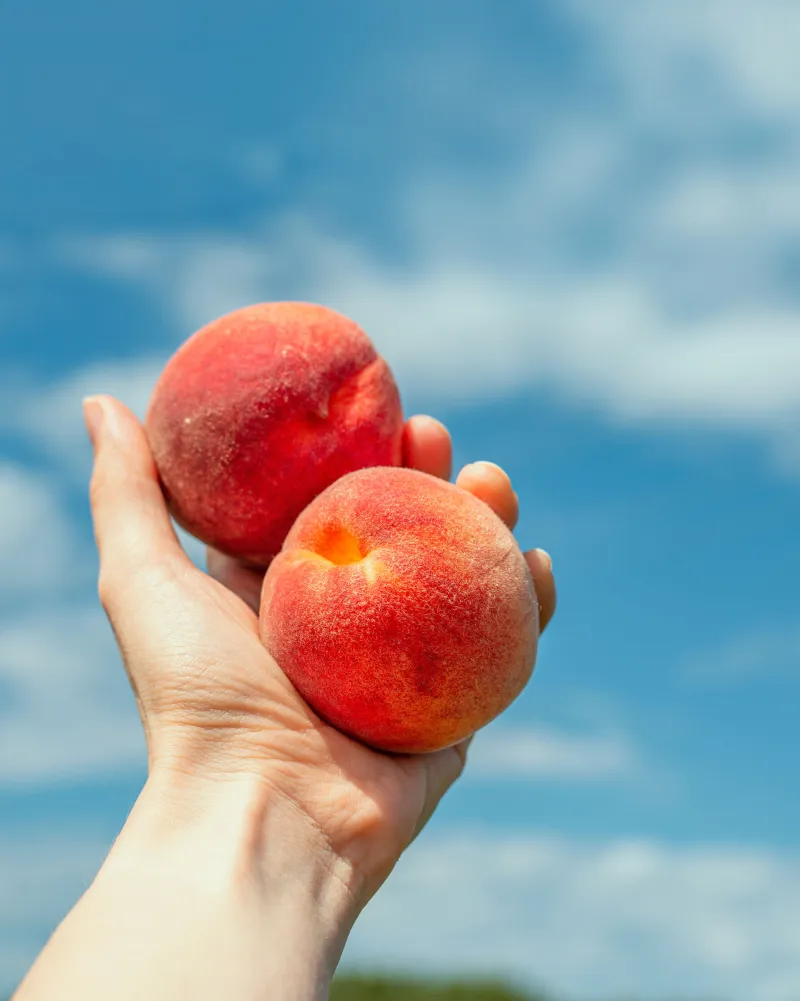
Late-season peaches can be excellent for this. They are often a little softer, a little more fragrant, and less precious than the perfect specimens you might want to eat raw. If they are slightly woolly or under-ripe, cooking fixes that. Tinned peaches work beautifully too, especially those in juice rather than syrup. Frozen peach slices are perhaps the most underrated option: they are picked and frozen at a good moment, they break down easily, and they mean you can make this in February without pretending fresh peaches are at their best.
A rough guide is 1.2kg prepared peach flesh. That is about 1.5kg whole fruit, two 400g tins drained, or 1kg frozen slices. If you are using tinned fruit, taste before adding much sugar. If you are using frozen, start with the smaller amount of sugar and adjust at the end.
The slow method
This is less a recipe than a rhythm. You can make peach butter in the oven or in a slow cooker, and both are good. The oven gives you a slightly deeper, more caramelised edge because the fruit sits in a wide layer and browns a little at the sides. The slow cooker is more hands-off and better if you are in and out all day.
For either method, begin by softening the fruit. Put 1.2kg prepared peaches into a heavy pan with 100ml water if using fresh or frozen, or just a splash if using tinned. Bring to a gentle simmer and cook for 15 to 20 minutes, until the fruit collapses. Mash with a potato masher or blend briefly. I like a little texture left in, but a smooth puree is more traditional.
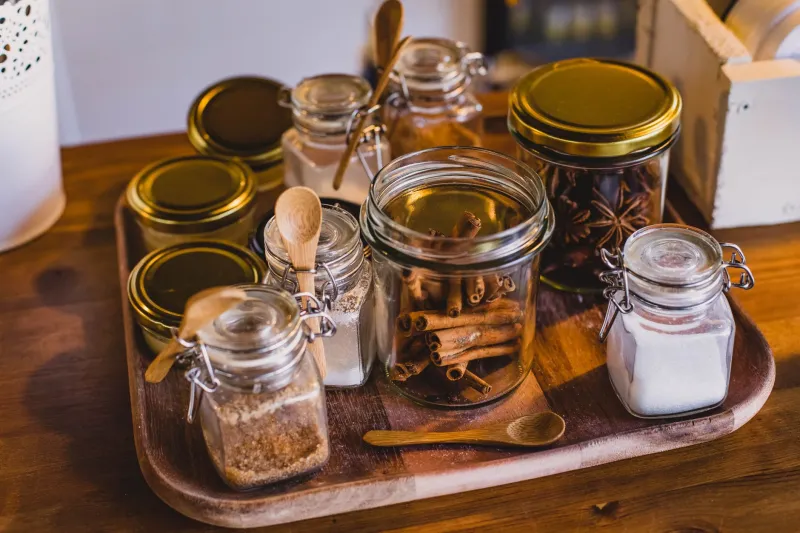
Now add 150g light muscovado sugar, 1 tbsp lemon juice, 1 tsp ground cinnamon or 1 cinnamon stick, half a teaspoon of mixed spice, a pinch of fine sea salt and, if you like, two star anise. A splash of cider vinegar at the end can wake the whole thing up, especially if the fruit tastes flat. Stir well.
For the oven, heat the oven to 140C fan or 160C conventional. Spread the mixture into a wide roasting tin or shallow casserole. Bake for 1.5 to 2.5 hours, stirring every 30 minutes or so, until it is thick, darker and a spoon dragged through leaves a clear trail. The timing depends on how wet your fruit was and how wide your tin is.
For the slow cooker, combine everything in the pot and cook on low for 6 to 8 hours with the lid on, then remove the lid for the last hour to reduce. Stir occasionally if you are around. Either way, taste at the end and adjust: more lemon for brightness, a little sugar if it is too sharp, a pinch more salt if it tastes muted.
Jars, keeping and the morning question
Sterilise three 250ml jars by washing them hot and drying them in a low oven, or by running them through a hot dishwasher cycle. Fill the jars while the butter is hot, seal, and let them cool. Keep in the fridge for up to three weeks, or freeze for up to three months. Because this is a lower-sugar preserve, do not treat it like a jar of marmalade in the cupboard.
The best way to eat it is also the simplest. A spoonful stirred through porridge. A dollop on thick yogurt with a few toasted oats. Spread on buttered soda bread. Alongside a piece of crumbly Lancashire or a slice of salty Cheddar. On a dark morning in November, that is not a small thing. It is a jar of borrowed sunlight, and it does exactly what it should.