A Crumble With Spine: Peach, Oat and the Art of Staying Crisp

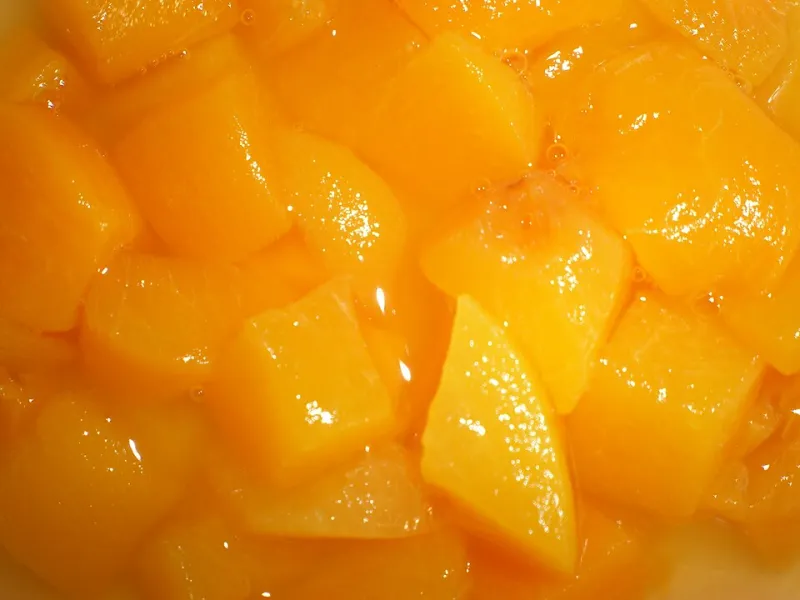
Photo: Xnatedawgx, CC BY-SA 4.0, via Wikimedia Commons
November is not kind to a crumble. The fruit gives up its juice, the topping drinks it in, and what should be a crisp lid turns into a damp blanket. It is a small domestic tragedy, and it is entirely avoidable. The fix is not a secret pastry technique. It is a bit of sequencing, a slightly more robust topping, and the willingness to cook the peaches before you cook the crumble.
Why peach crumbles go soft
Peaches are mostly water. When you pile raw fruit under a raw crumble and bake the whole thing from cold, the fruit releases steam and juice before the topping has had a chance to set. The oats and flour absorb that moisture, the butter melts into it, and the whole lot slumps. Tinned and frozen peaches are worse in one way and better in another: they are already soft, so they release liquid quickly, but they are also consistent, cheap and available in November. You just have to treat them as a fruit compote that needs thickening, not as fresh fruit that will somehow behave.
Cornflour is the quiet hero here. A couple of tablespoons tossed through the drained fruit gives the juices somewhere to go. Pre-baking the fruit in the dish does the rest. It drives off some water, starts the thickening, and means the topping goes on to a hot, bubbling base rather than a cold, wet one. The crumble then bakes rather than steams.
The topping: oats, demerara and a little grit
A good crumble topping should have texture before it goes in the oven. Rub cold butter into plain flour until it looks like coarse breadcrumbs, then stop. Stir through porridge oats for chew, demerara sugar for crunch, and a pinch of salt to keep it from tasting flat. Flaked almonds are optional but useful: they add another layer of crispness and go brown at the edges in a way that makes the whole thing look more accomplished than it is.
Do not overwork the mixture. You want clumps. Squeeze a handful together, break it into hazelnut-sized pieces, and scatter those over the fruit. A fine, even sand will bake into a biscuit lid; clumps give you the contrast between crisp and tender that a crumble needs.
The fruit: tinned or frozen, and how to treat it
For a dish that serves four to six, use two 400g tins of peach halves in juice, drained, or about 600g frozen peach slices. Keep the syrup from the tin if you like — a spoonful can go into the fruit with the cornflour, but too much will undo your work. Toss the peaches with two tablespoons of cornflour, a tablespoon of caster sugar if the fruit is sharp, a squeeze of lemon juice and a pinch of salt. Tip into a shallow ovenproof dish, about 20cm across, and bake at 200C/180C fan/gas 6 for 15 minutes, until the juices bubble at the edges.
A tested peach and oat crumble
This is the version I make when the heating is on and the light has gone by four.
For the fruit
- 2 x 400g tins peach halves in juice, drained, or 600g frozen peach slices
- 2 tbsp cornflour
- 1 tbsp caster sugar, if needed
- Squeeze of lemon juice
- Pinch of fine salt
For the topping
- 100g plain flour
- 60g cold unsalted butter, cubed
- 50g porridge oats
- 40g demerara sugar
- 25g flaked almonds
- Pinch of ground cinnamon or grated nutmeg
- Pinch of fine salt
Heat the oven to 200C/180C fan/gas 6. Put the peaches in the dish and toss with the cornflour, sugar, lemon and salt. Bake for 15 minutes. Meanwhile, rub the butter into the flour until you have coarse breadcrumbs. Stir in the oats, demerara, almonds, spice and salt. Squeeze the mixture into clumps. Scatter over the hot fruit, keeping some peaks and gaps. Bake for 25 to 30 minutes, until the topping is deep golden and the juices bubble up around the edges. Rest for 10 minutes before serving. Custard is the correct answer; cold cream is the other correct answer.
Make-ahead and the second round
A crumble is a good candidate for making ahead, but only if you keep the fruit and topping separate until the last minute. Pre-bake the fruit, cool it, and refrigerate it in the dish. Make the topping and keep it in a tub in the fridge. When you want to bake, scatter the cold topping over the cold fruit and add about 10 minutes to the baking time. The topping will stay crisper than if it had sat on the fruit overnight.
If you have already baked the crumble and need to reheat it, do not cover it. A covered dish traps steam and turns the oats soft. Reheat at 180C/160C fan/gas 4 for 15 to 20 minutes, uncovered. If the topping has lost its nerve, give it a final five minutes at 220C/200C fan/gas 7. Avoid the microwave for anything larger than a single portion; it will heat the fruit and leave the topping limp.
The point of the exercise
A crumble is not supposed to be a precise thing. It is a homely pudding, and it should look a bit rough. But there is a difference between rough and soggy. Pre-baking the fruit, thickening the juices and giving the topping enough texture to stand up for itself is not fussy. It is just good cooking. And in November, a crisp-edged peach crumble with a jug of custard is worth a little sequencing.