Cling or Free? How to Buy Better Peaches and Nectarines in the UK
At Clingstone, we spend an unreasonable amount of time thinking about stones. Walk into a UK supermarket in autumn 2026 and you will find peaches, white peaches, nectarines and the occasional box of flat doughnut peaches. What you will almost never find is the piece of information that actually matters in the kitchen: whether the fruit is clingstone or freestone. It sounds like jargon, but it tells you how a peach will behave when you cut into it, bake it or put it on a hot grill. Here is the short version, plus what to do with each type.
Clingstone and freestone: the difference is in the pit
A clingstone peach has flesh that holds tightly to the stone. A freestone peach has flesh that pulls away cleanly, leaving you with two neat halves and a pit that pops out. Semi-freestone varieties sit somewhere in between. That is the whole idea. Clingstone peaches tend to appear earlier in the season and are often firmer, which makes them good for canning, jam and eating out of hand when ripe. Freestone peaches are usually larger and later, and they are the ones you want for tarts, crumbles and anything that needs tidy halves. Nectarines are simply smooth-skinned peaches, and they come in clingstone and freestone forms too. White peaches can be either, though many are clingstone.
What the label will not tell you
UK supermarket packs rarely use the words clingstone or freestone. You might see a variety name, a country of origin and a price, but not much else. Some packs say 'yellow flesh' or 'white flesh', which is useful for flavour but not for stoning. If you are buying from a greengrocer or market stall, ask. If you are buying a punnet, use your hands: a ripe freestone peach will feel slightly soft at the stem end and have a good smell. A hard peach will be hard to stone whatever the label says. Do not refrigerate peaches until they are ripe; cold turns them mealy. Ripen them in a bowl at room temperature, then eat or cook them.
The varieties you are most likely to meet
| Variety or type | Cling or free? | Best for |
|---|---|---|
| Redhaven | Freestone | All-rounder: eating, baking, freezing |
| Elberta | Freestone | Classic yellow peach for tarts and crumbles |
| White peaches | Often clingstone | Eating fresh, delicate desserts |
| Doughnut peaches | Clingstone | Eating fresh, lunchboxes, greedy snacking |
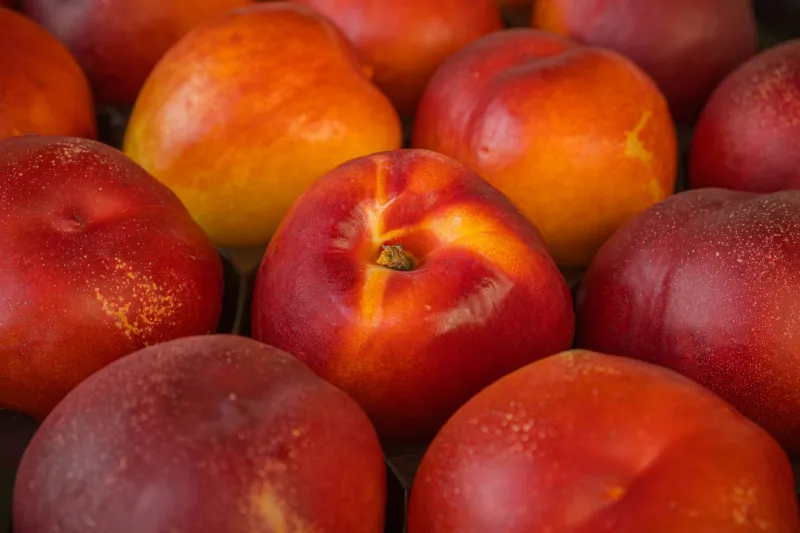
| Nectarines (e.g. Fantasia) | Usually freestone when ripe | Grilling, salads, eating fresh |
| Yellow peaches (unnamed) | Either | Check by feel; good for cooking if firm |
This is not an exhaustive list, and imported fruit varies by week. Spanish and Italian peaches dominate UK shelves from late spring to early autumn, with French fruit appearing in high summer. British peaches are a smaller affair, grown in Kent, Herefordshire and a handful of other spots, and they are worth seeking out in July and August. By November, most fresh peaches are imports, so use the feel test.
Best for eating fresh
For pure eating, look for white peaches and doughnut peaches. They are often clingstone, which does not matter when you are biting into them. They should be fragrant and slightly soft. A ripe white peach is sweeter and less acidic than a yellow one, with a floral finish. Doughnut peaches are crisp-sweet and easy to eat, though the stone is still there. Nectarines are excellent too, especially when they are ripe enough to drip. Wash them, eat them over the sink, and do not apologise.
Best for baking
Freestone yellow peaches are the baker's friend. They halve cleanly, sit flat in a tart shell and soften without falling apart. Use them in an almond frangipane tart, a simple crumble or a galette. If you only have clingstone peaches, do not despair: slice the flesh away from the stone in wedges. It is messier, but the fruit will still taste good. Clingstone peaches are also excellent for jam, because the flesh breaks down and the stone is easy to fish out. For a quick pudding, roast halved freestone peaches with butter and brown sugar.
Best for grilling
Grilling works best with firm fruit. Choose freestone or semi-freestone peaches and nectarines that are ripe but still hold their shape. Halve them, brush the cut sides with a little oil, and grill cut-side down for three to four minutes, until marked and slightly softened. Turn and grill for another two minutes. Serve with burrata, prosciutto or ice cream. A clingstone peach will work if it is firm, but the stone makes neat halves impossible; grill wedges instead.
A UK buying guide for 2026
In May and June, expect Spanish and Italian imports, often clingstone and firm. In July and August, British peaches and nectarines appear, along with French imports; this is the time to buy by smell. In September and October, late imports and the last British fruit are still good, but quality is variable. By November, fresh peaches are a luxury import, so buy only what you will eat within a few days. If you want to cook with peaches out of season, frozen peach slices are a sensible shortcut for crumbles and smoothies.
Three ways to use what you buy
For freestone peaches, make a peach and almond galette: arrange sliced fruit over frangipane and rough puff pastry, fold the edges over, and bake until golden. For clingstone peaches, make a small batch of peach jam with sugar, lemon juice and a vanilla pod; the flesh will collapse around the stone, which you can remove with a spoon. For nectarines, grill halves and serve with torn mozzarella, basil and a drizzle of olive oil. The cling/free distinction is a guide, not a rule. Ripe fruit, chosen with care, will always do the right thing.