A Firmer Kind of Jam: Peach and Plum Fruit Cheeses for the Cheese Board
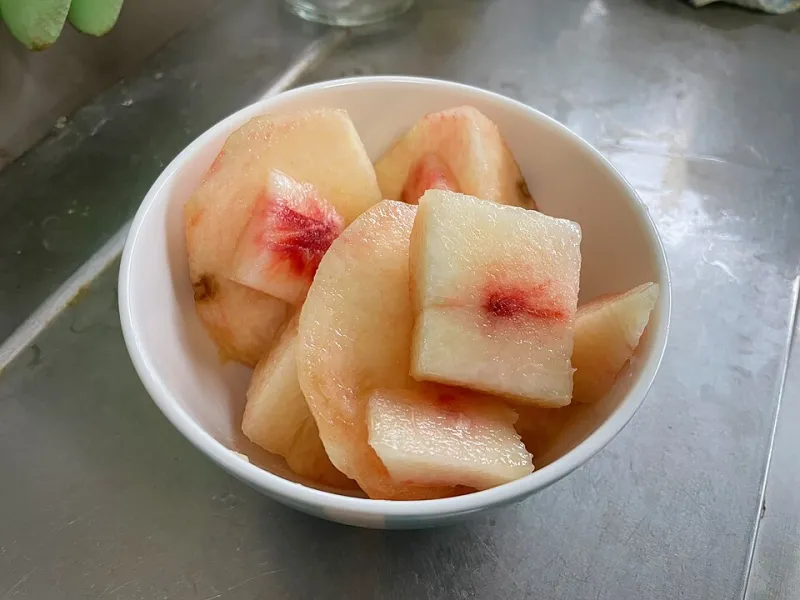
Photo: Kyu3, CC BY-SA 4.0, via Wikimedia Commons
A fruit cheese is not cheese. It contains no milk, no rennet and nothing that has ever been near a dairy. It is a preserve so thick, so reduced and so set that it can be sliced, cubed and laid on a board next to a wedge of cheddar. The name comes from the old habit of pressing the cooked fruit into moulds, turning it out like a cheese and letting it firm up. In Britain we have mostly forgotten it, which is a shame. A good fruit cheese is one of the most useful things you can have in the larder between November and February.
What fruit cheese actually is
Fruit cheese is made from fruit pulp cooked with sugar and acid until it is stiff enough to hold its shape. It is denser than jam, smoother than chutney and far less sweet than it sounds. The best versions have a faint tartness and a clean, sliceable bite. Quince cheese — membrillo — is the most famous example, and it is the one most British cooks know from a cheese board. But peaches, plums, damsons, apples and pears all work. The technique is old, practical and forgiving, as long as you are patient.
In the Tudor and Elizabethan larder, fruit cheeses were a way to preserve a glut. They were cooked down in preserving pans, poured into moulds, dried in a cool room and cut into pieces when needed. They kept for months and travelled well. The same logic applies now. If you have a punnet of plums that are going soft, or a tin of peaches that seemed like a good idea in the shop, fruit cheese is a better destination than another crumble.
Not chutney, not jam
It is worth being clear about the difference, because the words get used loosely. Chutney is a vinegary, chunky preserve, usually with onions, spices and a bit of heat. It is designed to be spooned. Jam is soft-set and spreadable, with pieces of fruit suspended in a gel. Fruit cheese is cooked much further. The fruit is broken down completely, the sugar is dissolved and the mixture is reduced until a spoon drawn through it leaves a clean channel. When it cools, it should cut cleanly with a knife.
That means fruit cheese takes longer than jam and needs more attention at the end. It also means you can make it with fruit that is slightly past its best. Bruised plums, soft peaches and frozen slices are all fair game. The one thing you cannot do is rush the reduction. A watery fruit cheese will mould; a well-reduced one will sit in the larder for months.
The setting point
The setting point for fruit cheese is not the same as for jam. You are not looking for a soft wrinkle on a cold saucer. You are looking for a firm set that will slice. Use a preserving pan or a wide, heavy-based saucepan so the mixture has room to evaporate. Cook the fruit first until it is completely soft, then pass it through a sieve or blend it smooth. Return the pulp to the pan with the sugar and acid.
The ratio I use is 500g granulated sugar to 1kg prepared fruit pulp. Peaches are low in pectin, so they need a little more lemon juice than plums. Plums have enough pectin of their own, especially if you include a few slightly underripe ones. Stir over a low heat until the sugar has dissolved, then raise the heat and bubble steadily, stirring often, until the mixture is thick and glossy. A thermometer should read around 104C to 105C, but do not rely on it alone. Put a spoonful on a cold plate, wait a minute, and push it with your finger. It should wrinkle and hold, not run. If it is still loose, keep cooking.
Peach and bay fruit cheese
This is the softer, more floral of the two. Bay keeps the peach from tasting like a fruit sweet and gives it a savoury edge that works well with cheese.
Makes about 4 small jars or one 20cm block
- 1kg prepared peach pulp (about 1.5kg ripe peaches, or 1kg frozen peach slices, thawed and drained)
- 500g granulated sugar
- Juice of 1 lemon
- 3 bay leaves
- Pinch of fine salt
If using fresh peaches, score a cross in the base of each, blanch for 30 seconds in boiling water, then peel. Halve, stone and chop. Put the fruit in a pan with the bay leaves and a splash of water. Simmer gently until completely soft, about 15 minutes. Remove the bay, blend or sieve the pulp until smooth. Return to the pan with the sugar, lemon juice and salt. Stir over a low heat until the sugar dissolves, then cook at a steady bubble, stirring often, for 45 to 60 minutes, until the mixture is very thick and holds a line when you drag a spoon through it. Pour into sterilised jars or a lined loaf tin. Cool completely before sealing or turning out.
Plum and star anise fruit cheese
Plums set more readily than peaches, so this one is a good place to start if you have never made fruit cheese before. Star anise gives it a clean, liquorice edge that is excellent with blue cheese.
Makes about 4 small jars or one 20cm block
- 1kg plums, stoned
- 500g granulated sugar
- Juice of 1 lemon
- 2 star anise
- Pinch of fine salt
Put the plums in a pan with the star anise and two tablespoons of water. Cook gently until the fruit has collapsed, about 20 minutes. Remove the star anise, then push the fruit through a sieve to remove the skins, or blend it if you prefer a rougher texture. Return the pulp to the pan with the sugar, lemon juice and salt. Dissolve the sugar over a low heat, then bubble steadily, stirring often, for 35 to 50 minutes, until the mixture is thick and sliceable. Test on a cold plate as above. Pour into sterilised jars or a lined tin and cool.
Storage and serving
Fruit cheese will keep for six months or more in sterilised jars in a cool, dark cupboard. Once opened, keep it in the fridge and use within a month. If you make a block, wrap it in parchment and keep it in a cool larder; it will firm up further as it sits. Serve it thinly sliced with cheddar, Lancashire, Wensleydale or a salty blue. It also works with cold ham, sourdough and walnuts, and a cube or two melted into a gravy gives a roast an unexpected lift. But the cheese board is where it belongs. A dark slice of peach and bay fruit cheese next to a pale wedge of cheddar is a small, old-fashioned pleasure worth reviving.