Sunshine in Suspension: A Working Guide to Dried Peaches
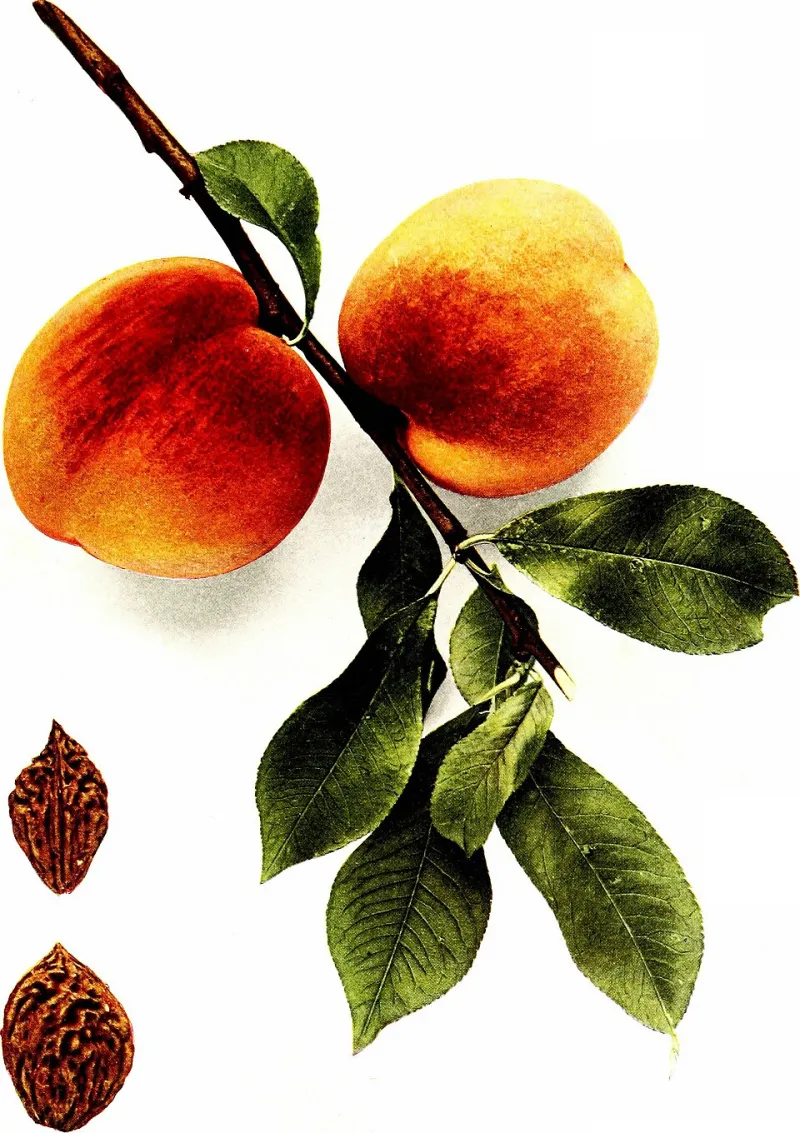
Photo: Internet Archive Book Images, No restrictions, via Wikimedia Commons
There is a moment, somewhere around the second week of November, when the fruit bowl stops being interesting. The last of the home-grown plums have gone soft and slightly sad, the imported peaches are expensive and taste of cold water, and the supermarket punnet starts to feel less like a treat and more like a gamble. This is where the dried drawer earns its keep.
Dried peaches do not pretend to be fresh ones. They are a different thing entirely — chewy, amber, sometimes almost caramel-tasting, with a tang that sits closer to apricot than to the juicy late-summer peach you ate in the garden. Treat them as their own ingredient, rather than a substitute, and the whole winter opens up.
What drying actually does
Take a peach, remove most of its water, and you concentrate everything else. The sugars tighten, the acidity sharpens, and the flavour darkens into something nearer to honey and stewed tea. You lose the floral top notes — the ones that make a ripe peach smell like a garden in July — but you gain depth, and depth is what cold-weather cooking wants.
Nutritionally, the fibre and most of the minerals survive, and a modest handful adds a good deal more flavour per gram than a cup of frozen chunks. That matters when you are cooking for two rather than twenty.
How to buy them in Britain
You will rarely find dried peaches on a supermarket shelf next to the sultanas. Look instead at Turkish and Middle Eastern grocers, health food shops, and the sort of deli that keeps jars of things you can't pronounce. Online, the specialist dried-fruit sellers are reliable and often cheaper by the kilo than the little bags on a Waitrose shelf.
Two variables decide what you get.
The first is sulphur dioxide. Most commercial dried peaches are treated with it, which keeps them bright orange and soft. Untreated ones are darker — brown, almost the colour of a worn leather strap — and firmer. Sulphured fruit rehydrates faster and holds its colour in a compote. Unsulphured fruit tastes more grown-up, with a faintly smoky edge, and is what you want if you are sensitive to the additive. Buy both if you can and see which you prefer.
The second is cut. Halves are the most useful for stuffing and slow-cooking, because they hold their shape. Slivers and dice are convenient for porridge and baking but rehydrate in minutes, so keep a bag of each.
Avoid anything that looks glassy or feels leather-hard in the bag — that usually means old stock that has dried out further in storage. A good dried peach should bend rather than snap.
Rehydrating: the ratios that matter
There is no single right answer here, because it depends entirely on where the fruit is going.
For porridge and breakfast, you barely need to hydrate at all. Chop the fruit small and let it sit in the oats overnight with the liquid; by morning it will be soft and the milk will have taken on a faint peach blush.
For a tagine or a slow braise, cover the fruit with hot water or tea, leave it for twenty minutes, then add it to the pot with a little of its soaking liquid. The rest of the liquid is good in the braise too — it tastes of peach and nothing else.
For stuffing, soak in hot water for ten minutes only. You want the fruit pliable enough to chop, not so soft that it collapses into the breadcrumbs.
A rough rule: 100g of dried halves will absorb roughly 200ml of liquid over half an hour. Start there and adjust.
Four places they earn their keep
Porridge and overnight oats. A handful of chopped dried peaches, a pinch of salt, and something warm is transformed. Add a spoon of toasted flaked almonds and you have breakfast that tastes like it came from a hotel.
Tagines and braises. Lamb with dried peaches, chickpeas and a spoon of harissa is one of the great winter one-pot dishes. The fruit softens into the sauce and gives it a sweet-sour backbone that no amount of sugar can replicate. Add it in the last forty minutes so it keeps some texture.
Stuffings. Chopped dried peaches with sausage meat, sage and stale sourdough is a stuffing that works for a Sunday chicken as readily as for a Christmas bird. The fruit keeps the crumb moist and cuts through the fat.
A compote in the fridge. The most useful thing you can make on a Sunday evening. Recipe below.
A compote to keep in the fridge
This makes enough for four or five breakfasts. It keeps for a week in a sealed tub.
- 200g dried peach halves
- 300ml water
- A strip of lemon peel
- One star anise, or a small piece of cinnamon bark
- A tablespoon of honey, or more to taste
- A squeeze of lemon at the end
Put everything except the lemon juice in a small pan. Bring to a bare simmer, cover, and cook gently for twenty-five to thirty minutes until the fruit is soft but still holding its shape. Take off the heat, leave to cool in the liquid, then add the lemon juice. The syrup will thicken as it cools.
Spoon it over yoghurt, through porridge, or onto a slice of buttered toast with a bit of sharp cheese. It is also excellent with cold roast pork.
Storing and the long view
Dried peaches keep for months in an airtight jar in a cool cupboard, but they do not keep forever. Once opened, they will slowly harden, and by February a bag that was soft in November may need an extra ten minutes of soaking. That is fine — just adjust.
In a very dry kitchen, a slice of apple in the jar helps keep things supple. In a damp one, keep the jar sealed properly or the fruit will go mouldy at the edges.
Buy a kilo in November, decant into a jar you can see, and let it sit there quietly until you need it. Somewhere around mid-January, when the light is still thin and the fruit aisle is dull, you will be glad of the amber drawer.