Small, Flat and Worth the Fuss: A Doughnut Peach Primer for the UK Kitchen
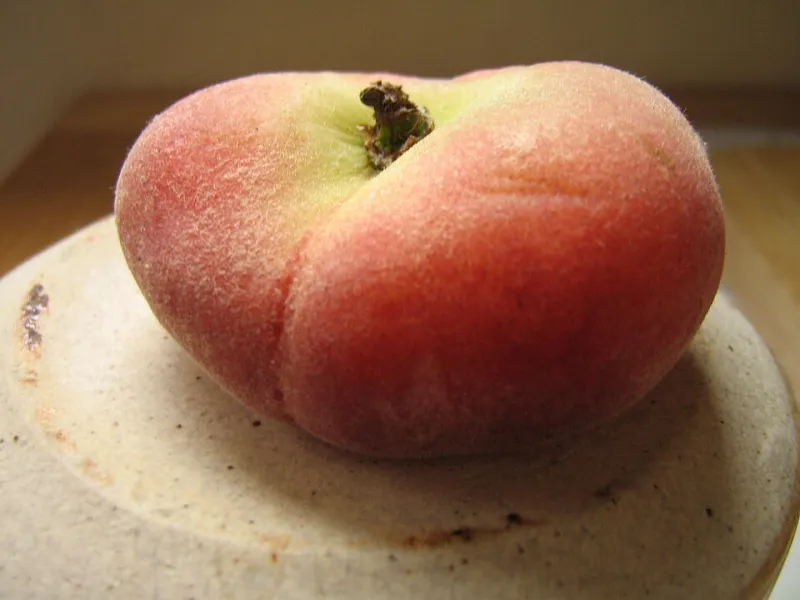
Photo: Daum, CC BY-SA 3.0, via Wikimedia Commons
The doughnut peach is the fruit equivalent of a squashed cushion: pale, fuzzy, oddly flattened and easy to overlook. Also sold as the flat peach or Saturn peach, it has a small pit, a thin skin and white flesh that is low in acid and high in perfume. In the UK you will see them from late June through September, with imports from Spain and Italy filling the gaps and British grown fruit — still a small crop — arriving in high summer. They are not a novelty. They are one of the best things you can put in a bowl.
First, the name (and the shape)
A doughnut peach is a peach with a recessive gene that flattens it. The stone sits in a small central cavity rather than running through a round fruit, and the flesh is packed around it in a disc. That means more skin and more surface area per gram of fruit. It also means the fruit feels denser in the hand than it looks, which is useful when you are buying.
The flavour is gentler than a classic yellow peach — less sharp, more floral, sometimes closer to a pear or a melon. That is not a weakness. It makes them very easy to eat raw and very forgiving in the pan. The skin is thin enough that you do not need to peel them for most cooking, though it will slip off blanched fruit if you want a smooth puree.
How to choose one that is actually ripe
Supermarket punnets are often picked hard so they survive the journey. Look for fruit that feels heavy for its size and has a faint give when you press gently near the stem end, not at the centre. The centre is where the pit sits, so pressing there tells you nothing and bruises the flesh. A ripe doughnut peach smells sweet at the stem, not green. Slight wrinkles are fine; green shoulders and rock-hard fruit are not.
If you buy a hard punnet, leave it in a single layer on a plate at room temperature for two or three days. Do not put it in the fridge unless the fruit is already ripe and you need to stall it — the cold turns the flesh mealy and mutes the perfume. Once ripe, eat within a couple of days.
Why flat fruit cooks differently
That high surface-to-volume ratio changes everything. Sliced doughnut peaches soften faster than round peaches and release their juices quickly, so they caramelise and collapse in minutes rather than simmering for ages. Keep the pieces larger than you think you need. If you cut them into thin slices they will turn to jam before the pastry has browned.
The small pit is also an advantage: there is less waste, and the fruit sits flat on a board, which makes it easier to slice. The flat faces are perfect for a griddle pan. And because the flesh is low in acid, it takes to brown butter, salt, bitter leaves and strong cheese without turning sour. Think of them as a sweet vegetable rather than a dessert fruit.
Three things to make
1. Warm chicory and hazelnut salad with griddled doughnut peaches
For two, separate two heads of chicory into leaves and dress with a tablespoon each of cider vinegar and honey, three tablespoons of olive oil and a good pinch of salt. Toast 50g hazelnuts and roughly crush them. Cut three ripe doughnut peaches into thick wedges, brush with a little oil and griddle cut-side down for two to three minutes until marked and soft. Toss the chicory with the dressing, pile onto plates and top with the hot peaches, hazelnuts and, if you like, crumbled blue cheese. The bitterness of the chicory and the sweetness of the fruit do the work; do not add anything else.
2. Brown-butter doughnut peach galette
Heat the oven to 200°C/180°C fan/gas 6. Roll 320g all-butter puff pastry into a rough 28cm circle on a lined tray. Scatter 40g ground almonds over the middle, leaving a 4cm border. Slice four or five ripe doughnut peaches about 1cm thick, toss with a tablespoon of soft brown sugar and arrange in overlapping rings on the almonds. Brown 60g butter in a small pan until nutty, then spoon it over the fruit. Fold the pastry border up and over, pleating as you go, and brush with a little beaten egg. Bake for 30 to 35 minutes until the pastry is deep gold and the juices bubble. Cool for ten minutes before cutting. The flat slices layer neatly and cook through without turning to mush.
3. Quick pickled doughnut peaches for the cheese board
Bring 150ml cider vinegar, 100ml water, two tablespoons caster sugar, a teaspoon of salt, a bay leaf and a teaspoon of pink peppercorns to a simmer. Pour over three sliced doughnut peaches in a clean jar and leave to cool. They are ready in an hour and keep for a week in the fridge. Serve with British cheese — a crumbly Cheshire or a soft goat's cheese — and bread. The flat shape means the slices pack into the jar without gaps and pickle evenly.
A small fruit with a useful point
Doughnut peaches are not cheaper or more convenient than round peaches. They are, however, sweeter, easier to slice and better behaved in a hot pan. Buy a punnet when you see one, leave it on the counter until it smells right, and cook it with something bitter or salty. That is the whole case.