Board Games: A Savoury Case for Peaches, Plums and British Cheese

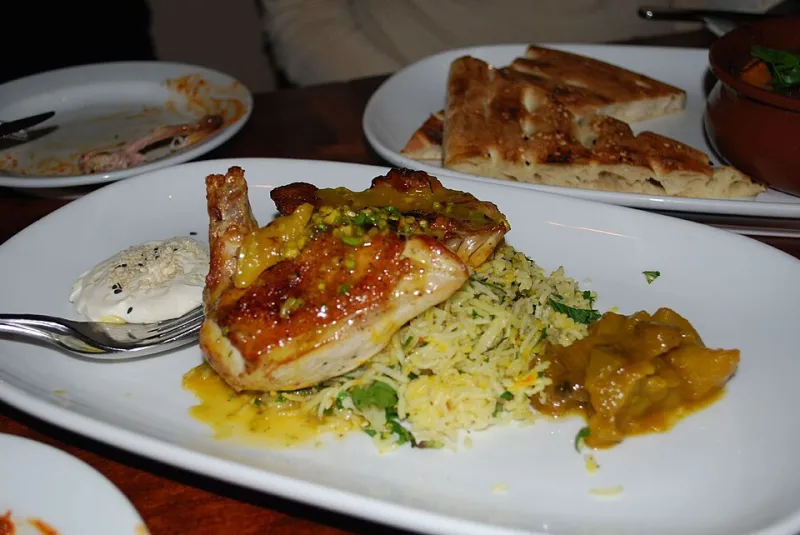
Photo: Bob Forrest, CC BY-SA 2.0, via Wikimedia Commons
The British cheeseboard has a fruit problem, and the problem is that fruit arrives too late. Grapes on the side. A few figs if someone is showing off. Then, once the crackers are gone and the port is out, a bowl of peaches appears as though fruit were a course rather than an ingredient.
It should be the other way round. Stone fruit is some of the best cheese company going — acidic enough to cut fat, sweet enough to answer salt, soft enough to smear onto an oatcake. Put it in the middle of the board and let people work out what they like.
Why it works
Cheese is fat, salt and acidity, and it wants all three answered. A ripe peach brings perfume and gentle sweetness. A plum brings tartness and a bit of grip from the skin. A roasted apricot brings concentrated, almost jammy depth. Add something crisp and something cured and you have a board that eats like a meal rather than a pause before pudding.
Salt helps, too. A pinch of flaky salt on a sliced peach is the single cheapest upgrade in this article.
The pairings worth knowing
- Mature Cheddar and plum. Sharp, crumbly, crystalline Cheddar wants acid, not sweetness. A slightly under-ripe plum, sliced thin, does the job better than any chutney.
- Soft goat's and peach. The classic. Creamy, tangy goat's curd with a ripe peach is the whole argument in one bite.
- Blue and roasted plum. Stilton or Shropshire Blue against a plum roasted with a little honey until it slumps — the salt and the sweetness meet in the middle.
- Crumbly Lancashire and nectarine. Lancashire is a gentle, lactic thing; nectarine's smooth, low-acid flesh keeps it from being shouted down.
- Cornish Brie and apricot. Buttery cheese, tart fruit. A halved apricot, grilled cut-side up for a few minutes, is even better.
- Wensleydale and fresh peach. Mild, slightly sour, crumbly — the sort of cheese that needs fruit rather than resents it.
Building the board
Aim for three cheeses, one of each temperament: a hard one, a soft one, a blue. Around 80–100g of each per person is generous; 60g is plenty if there is other food.
The cheese. One mature hard (Cheddar, Cheshire, a good Double Gloucester), one soft or bloomy (goat's curd, Cornish Brie, a young Tunworth), one blue (Stilton, Shropshire, or a gentler blue for sceptics).
The fruit. Two or three kinds, in different states — some raw and sliced, some roasted. Raw fruit should be sliced at the last minute and tossed with a squeeze of lemon so it does not brown.
The rest. Oatcakes and a plain sourdough cracker. Something cured — British charcuterie has come a long way, and a slice of fennel salami sits nicely with peach. A small dish of honey or a spoonable compote. Toasted walnuts or hazelnuts. Flaky salt. Black pepper.
The arrangement. Keep wet things apart from crisp things. Leave a knife on the board for the soft cheese and let people get on with it. Take the cheese out of the fridge an hour before serving — cold cheese tastes of very little, which is the whole point of the hour.
A quick peach-and-honey compote
Makes enough for a board, with leftovers for porridge.
- 4 ripe peaches, halved and stoned (no need to peel)
- 2 tbsp honey
- 1 tbsp lemon juice
- A strip of orange peel
- A pinch of salt
- 1 tbsp water
Put everything in a small pan over a low heat. Cover and cook gently for 10–12 minutes, until the fruit slumps but has not collapsed entirely. Lift out the orange peel, mash lightly with a fork and let it cool. Serve at room temperature, spooned into a small dish beside the goat's, or dragged through the blue.
In November, when the season thins
By the second week of November the British peach season is a photograph. The plums are imports, and the fresh fruit on the shelf is firmer and less fragrant than it was in August. Adjust rather than despair.
Roast what you buy. Halve peaches or plums, dot with honey and a splash of vinegar, and roast at 200°C for 15–20 minutes. Roasting rescues firm fruit and makes the most of fruit that was never going to be great raw. A plum roasted with a star anise and a bay leaf is a fine thing next to a blue cheese.
Lean on the other fruit, too. Quince paste, membrillo, dried apricots plumped in a little warm honey syrup, a pear sliced thin. Tinned peaches, drained and roasted, are entirely legitimate in a month when the alternative is a hard nectarine that tastes of water.
And if the whole thing feels like too much effort for a Tuesday, the minimum viable version is a slice of Cheddar, a plum, an oatcake and a pinch of salt. That is also a cheeseboard. Nobody has to know how little work went into it.